Automation History
Ancient Automation Book 2
Ancient Automation Book 2
Couldn't load pickup availability
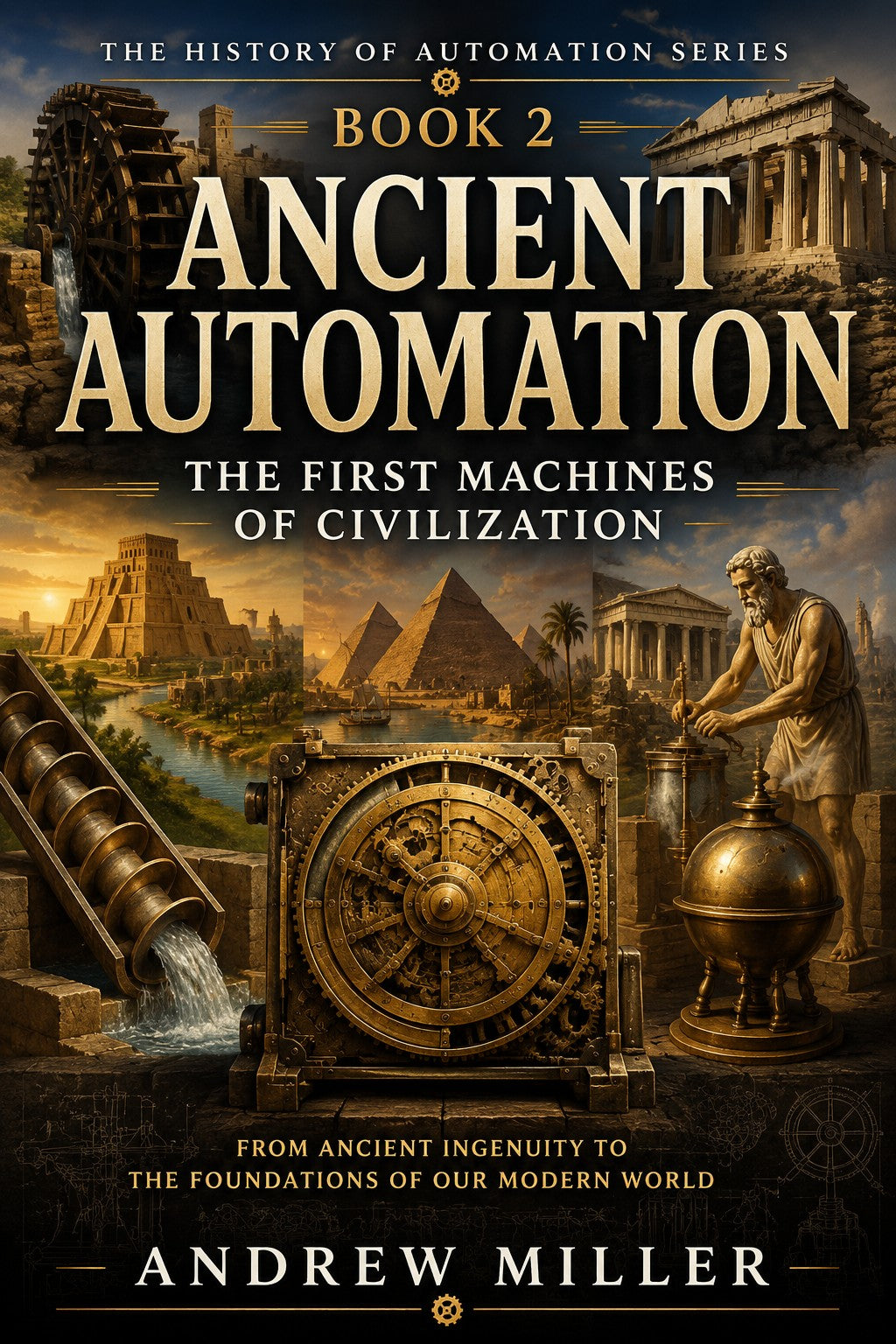
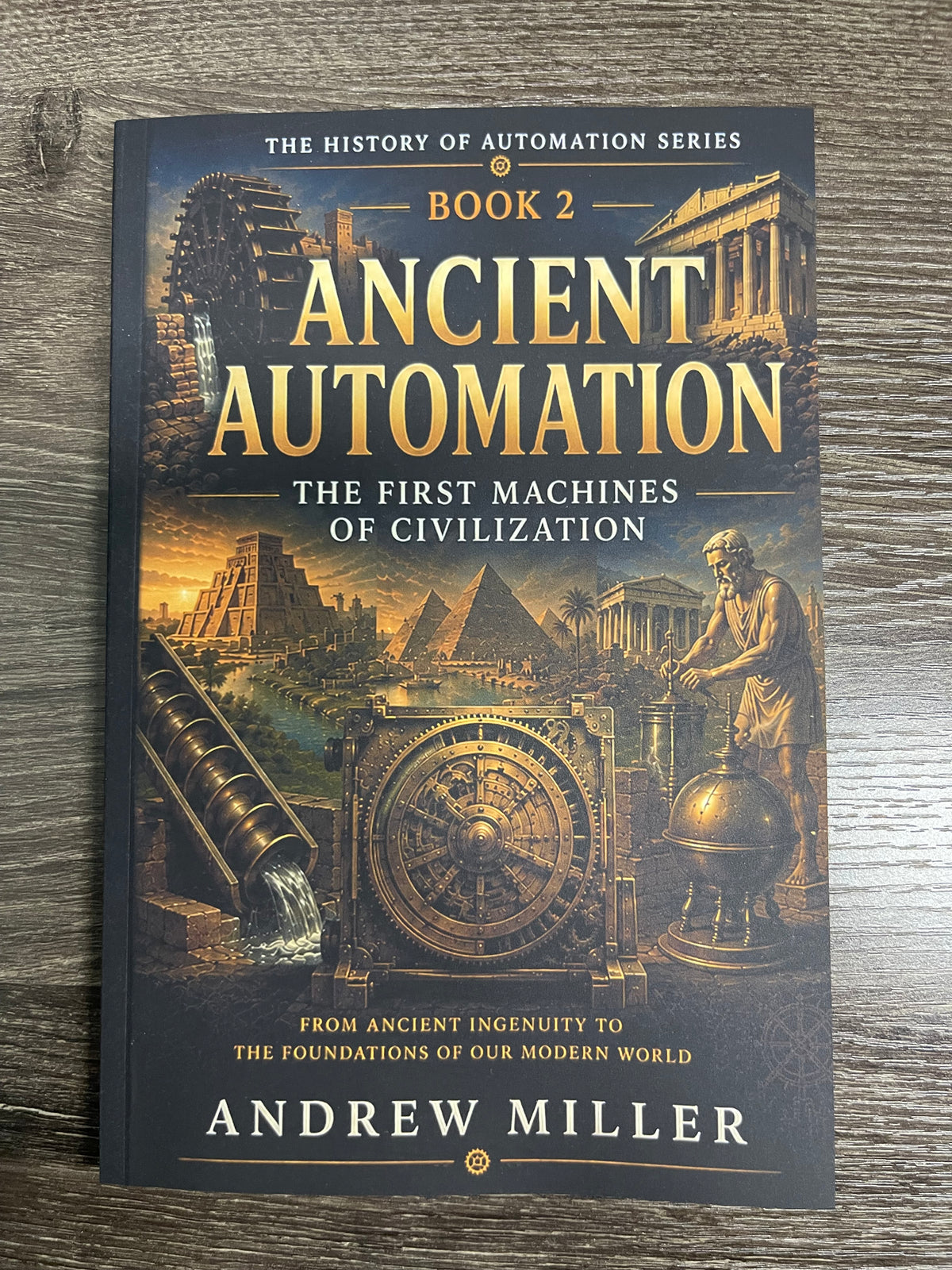
Ancient Automation is Book 2 in the History of Automation series. It stays with ancient machines. It does not treat them as the first draft of a robot, a factory, or a computer.
The book walks through Mesopotamia, Egypt, Greece, Rome, and China. The subjects are irrigation and water control, water clocks, pumps, gears, watermills, and devices described in the mechanical texts. A canal was managed by people. A water clock measured time by the flow of water. A mill turned a river into rotary power and still needed a miller. None of these was a modern control system.
Philon of Byzantium and Hero of Alexandria are here because their writings describe hydraulics, pneumatics, and automata. A description in a text is not the same thing as a machine that was built and used. Where the archaeology is thin, the book says so.
The Antikythera mechanism is included as a geared Greek instrument for modeling astronomical cycles. It is evidence of fine gear-cutting. It is not an industrial machine, and it is not an early computer in the modern sense.
You will not be told that controlled motion, gears, or water power “evolved into” the Industrial Revolution, programmable logic controllers, or industrial robots. A likeness between an old mechanism and a later one is named as a likeness. It is not promoted into a cause. Medieval machinery, steam, and electrical control belong to other books.
This volume is for readers of ancient history, archaeology, engineering, and the history of technology who want the machines without a slogan. Students, teachers, and people who work around industrial equipment are welcome. You do not need an engineering degree to begin.
Andrew Miller, founder of Automation History, spent more than a decade around industrial automation, robotics, maintenance, and operations, then went back to the texts and the remains. That shop experience is useful when a later comparison is tempting. It is not a reason to call an ancient device the start of automation.
The history of automation, as a modern practice, did not begin with a water clock or a geared astronomical instrument. This book is about those older machines on their own terms. The sources for individual claims stay on the free articles at Automation History. The book is a guided reading, not a substitute for those sources.